One of the most common questions we hear from Boise homeowners considering a garage floor coating is a fair one: are epoxy floors slippery? The short answer is that a glossy coating can be slick when wet, but that is entirely manageable, and with the right anti-slip additive an epoxy or polyaspartic floor can actually be safer than bare concrete. The concern matters more here than in a lot of places, because Treasure Valley winters mean snow and slush get tracked into the garage constantly. This guide explains when coated floors get slippery, the anti-slip options that solve it, and how to keep a Boise garage safe through the winter.
A smooth, high-gloss epoxy or polyaspartic surface has little texture, so when water sits on top it can get slick, the same way a polished tile or sealed concrete floor does when wet. Dry, it offers plenty of grip. The issue is specific to wet conditions, and in Boise that means winter, when vehicles carry in snow, slush, and meltwater that puddles on the floor. It is not that the coating is inherently dangerous; it is that a glossy surface plus standing water plus winter boots is a combination worth designing around from the start.
This is where local conditions really matter. Across the Treasure Valley, from Meridian to Nampa and Eagle, cars pull into the garage caked with snow and the magnesium-chloride brine that Idaho spreads on the roads. That mix melts onto the floor and creates exactly the wet, slick conditions where an untreated glossy coating can be a hazard. It is also why a quality coating is worth having in the first place, since it protects the concrete from that corrosive deicer, but it does mean anti-slip should be part of the plan for any Boise garage that sees winter use.
The standard solution is straightforward and effective: a slip-resistant additive broadcast into the top coat. The most common is a fine aggregate, often aluminum oxide or a polymer grit, mixed into or sprinkled onto the final clear coat to create micro-texture that grips underfoot even when wet. You barely see it, but you feel the difference. The amount and coarseness can be tuned to your preference, more aggressive for maximum traction, finer for a balance of grip and easy cleaning. For most Boise garages, a moderate anti-slip additive in the top coat completely resolves the slipperiness concern.
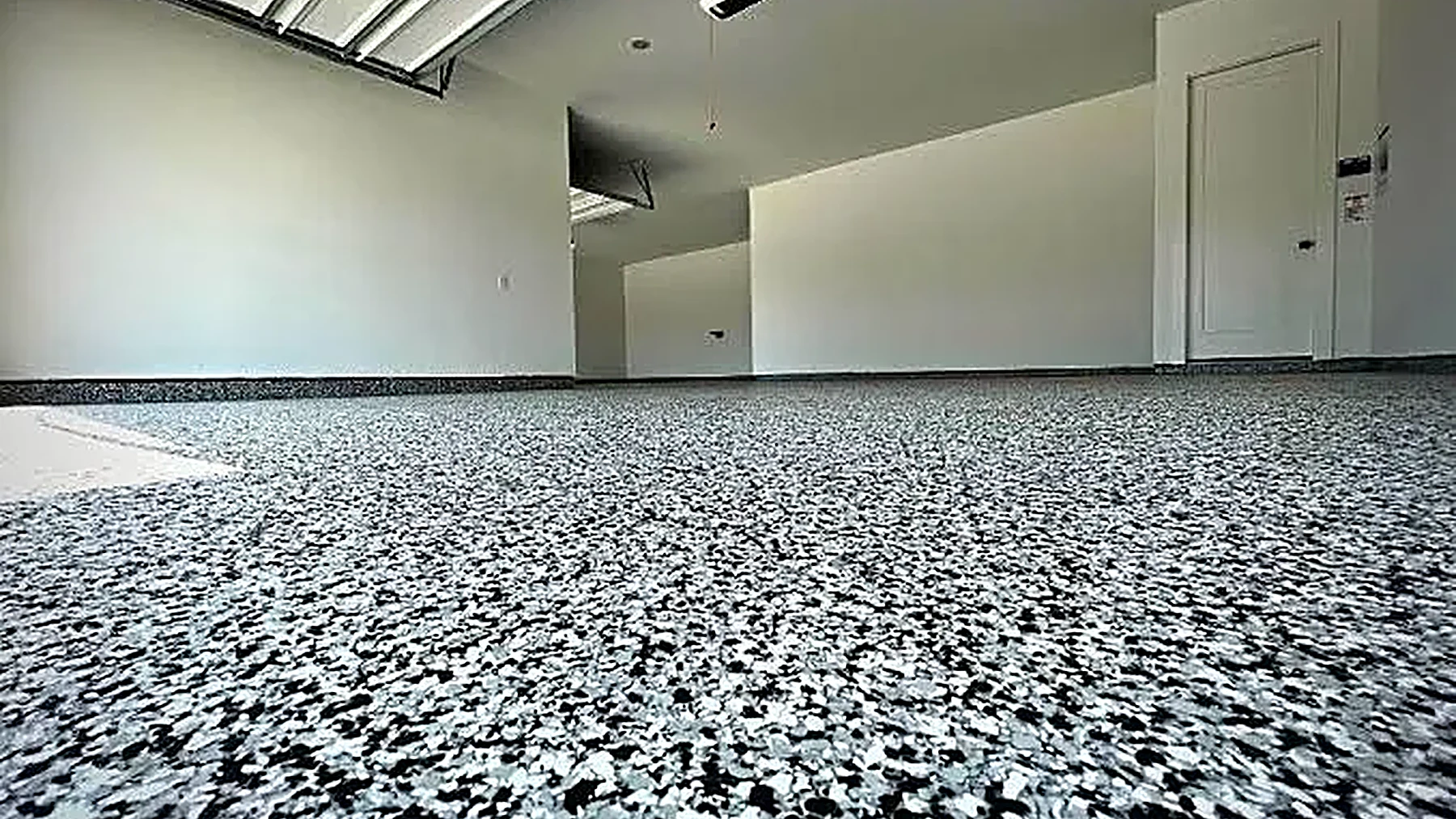
Here is a bonus many homeowners do not realize: a full broadcast flake floor, the popular speckled look where color chips are cast into the coating, already has more texture than a smooth solid-color floor. The flakes create a subtly varied surface that provides better grip than a glass-smooth finish, and adding a fine anti-slip aggregate on top makes it excellent. So if you like the decorative flake look, which is by far our most popular finish in Boise, you are already ahead on traction. Our post on flake versus metallic floors compares the finishes in more detail.
There is a tradeoff worth understanding. More aggressive anti-slip texture grips better but is slightly harder to clean, since a coarse surface can hold a little more dirt. A smooth floor wipes and mops effortlessly but offers less wet traction. The right balance depends on how you use the space: a garage that sees heavy winter traffic and doubles as a workspace benefits from more grip, while a showpiece garage that stays mostly dry might favor a finer texture. A good installer helps you pick the level that fits your priorities rather than defaulting to one setting.
Not every square foot needs the same treatment. The highest-value spots for anti-slip are the areas right where vehicles park and drip, the entry from the driveway, and any walkway to a door, since those are where water collects and where people walk. Some homeowners choose a bit more texture in those zones and a smoother finish elsewhere. Outdoor or partially exposed areas, and any coated patio or walkway, should always get anti-slip given Boise's freeze-thaw and precipitation. Thinking about traffic patterns lets you put grip where it counts.
Beyond the coating itself, a couple of habits keep a Boise garage floor safe. Squeegeeing or mopping up snowmelt rather than letting it pool reduces standing water, and a mat or tray under where the car drips catches the worst of it. Because a quality coating is non-porous, that water sits on top and wipes away easily rather than soaking in, which is part of what makes coated floors so practical here. For general guidance on concrete coatings and finishes, the Concrete Network offers homeowner resources at concretenetwork.com.
It is worth putting the slipperiness question in perspective, because homeowners sometimes assume bare concrete is the safer default. In reality, untreated concrete is quite slippery when wet too, and worse, it is porous, so it soaks up the magnesium-chloride brine and moisture that come off Treasure Valley roads all winter, leading to staining, dusting, and freeze-thaw pitting over time. A properly coated floor with an anti-slip additive typically offers better wet traction than bare concrete while also sealing the surface against that damage. In other words, adding a coating does not create a safety problem so much as let you solve one, since you get to choose exactly how much grip you want rather than being stuck with whatever the raw slab provides. The same logic applies to the alternatives some people consider, like a smooth sealed or polished concrete floor, which can be slicker than a textured coating when wet. When you weigh the options for a Boise garage that will see snow and slush for months each year, a coated floor with tuned anti-slip texture is usually the safest and the most durable choice at once. That combination of protection and traction, rather than one at the expense of the other, is exactly what makes these systems so well suited to our climate, and it is why we build anti-slip into the plan as a matter of course rather than an afterthought.
If you tell us how you use your garage and how much winter traffic it sees, we can recommend the exact level of texture that keeps it safe without making it harder to keep clean.
It is a quick conversation that makes a real difference come January.
Epoxy and polyaspartic floors are only slippery when wet and untreated, and that is an easy problem to solve. With a slip-resistant additive in the top coat, especially on the popular flake finish, a coated Boise garage floor gives you solid traction even through a slushy Treasure Valley winter, plus all the protection a coating provides against deicer and moisture. If safety is on your mind, just make anti-slip part of the conversation up front. We are glad to recommend the right level of texture for how you use your garage. Our Boise coating cost guide covers pricing as you plan.
A smooth, high-gloss epoxy can be slick when water sits on it, which in Boise mostly means winter when cars track in snow and slush. Dry, it grips fine. The fix is simple: a slip-resistant additive broadcast into the top coat adds micro-texture that grips even when wet, and the popular flake finish already has more traction than a glass-smooth floor.
The standard solution is a fine aggregate like aluminum oxide or a polymer grit mixed into or broadcast onto the final clear coat. The coarseness can be tuned, more aggressive for maximum grip in winter traffic zones, finer for easier cleaning. A flake floor with a moderate anti-slip additive is an excellent, low-maintenance choice for Treasure Valley winters.
Epoxy vs. Polyaspartic: Which Garage Floor Coating Is Right for You? — Epoxy and concrete floor coatings installed across Boise and the Treasure Valley.