Home > Blog > Guides
Guides • August 24, 2026
Best Garage Floor Coating for the Treasure Valley Climate
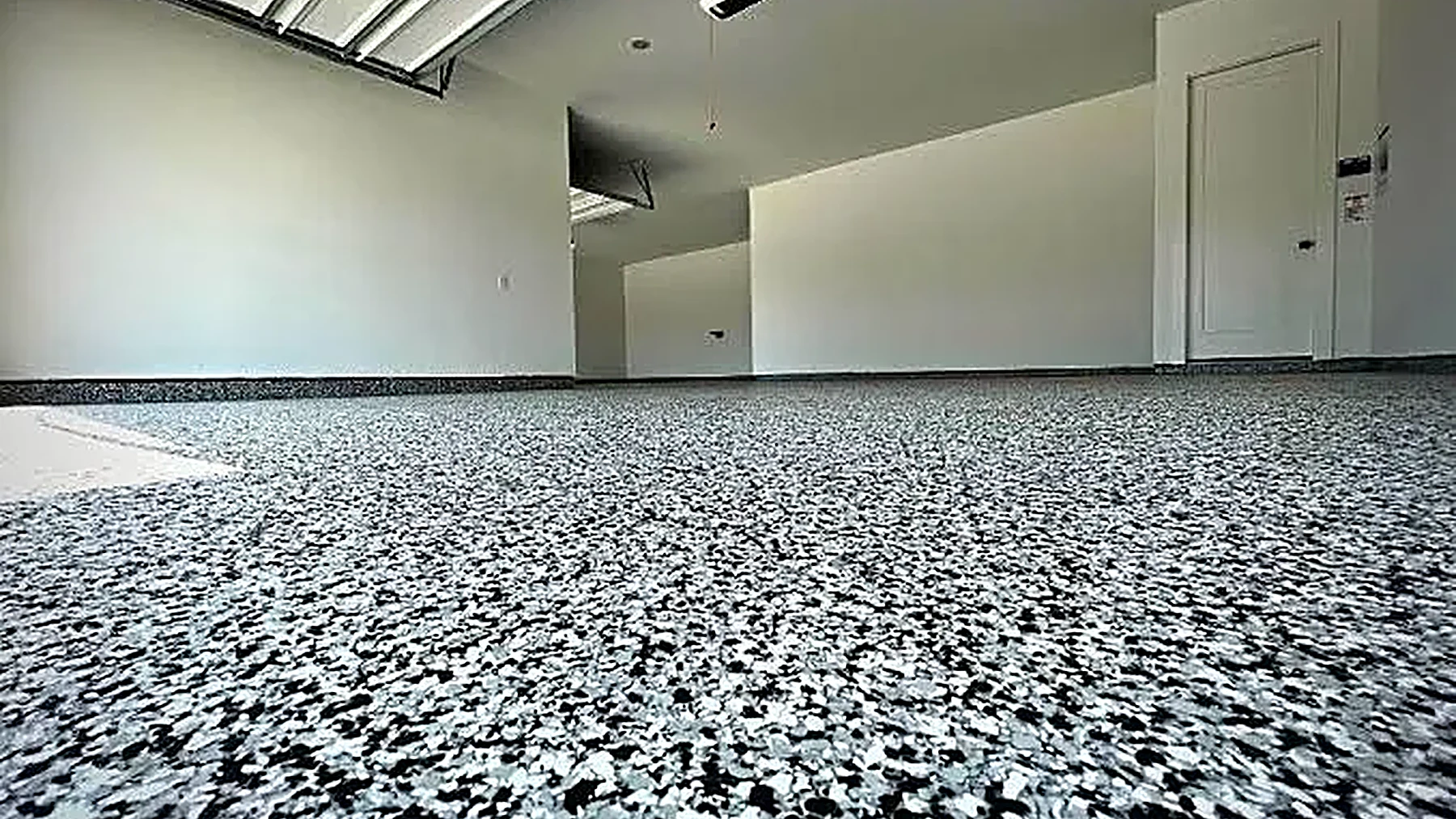
Search for a garage floor coating and you will find a dozen options and a lot of conflicting claims. The truth is that the best coating depends on your climate, and Boise's Treasure Valley climate has specific demands: freeze-thaw winters, magnesium-chloride road salt tracked in on tires, hot-tire pickup, and big temperature swings. A coating that is perfect in a mild climate may struggle here. Here is an honest comparison of the main systems and which one truly suits a Boise garage.
Before comparing products, understand what our climate throws at a garage floor. Vehicles bring in magnesium-chloride deicer from Boise roads, which is corrosive to concrete. Freeze-thaw stresses the slab. Warm tires parked on the floor create hot-tire pickup that can lift weak coatings. And temperatures in the garage swing widely through the year. The best coating is the one that shrugs all of that off, which narrows the field considerably.
Epoxy is the classic garage coating and it has real strengths: it is durable, creates a hard surface, bonds well when properly applied, and is cost-effective. But it has limits that matter in Boise. Epoxy cures slowly, especially in cooler temperatures, and it is more susceptible to hot-tire pickup than newer systems. On its own, epoxy is a solid choice, but for our conditions it is often not the best choice, which is why many Treasure Valley floors now use it as one layer in a hybrid rather than alone.
Polyaspartic coatings have become the premium standard, and for good reason in Boise. They cure very fast, allowing one-day installation even in cooler weather, resist hot-tire pickup, stand up to chemicals and road salt, and are UV-stable so they will not yellow. They are more expensive than basic epoxy, but their performance in exactly the conditions the Treasure Valley presents, salt, temperature swings, hot tires, makes them worth it for many homeowners who want a floor that simply lasts.
For most Boise garages, the best answer is a hybrid: an epoxy base coat for its bond and build, topped with a polyaspartic clear coat for its durability, chemical resistance, fast cure, and UV stability. This combines the strengths of both, an economical, strong foundation and a tough, salt- and hot-tire-resistant top layer. The hybrid approach has become the go-to for quality Treasure Valley installations precisely because it handles our climate better than either material alone.
Beyond the base chemistry, most quality floors include a decorative flake broadcast into the coating. Flake is not just cosmetic in Boise: it adds texture for slip resistance, which matters when snowy, salty tires drip on the floor, and it hides minor concrete imperfections and future wear. Full flake systems with a polyaspartic topcoat give you both good looks and a practical, non-slip, easy-clean surface. Metallic finishes are available for a more dramatic look where slip resistance is less critical.
Here is the most important truth: the best coating installed poorly will fail, and a good coating installed well will last. Proper preparation, mechanical grinding of the concrete, crack and spall repair, and correct application in the right conditions, matters more than the brand on the bucket. This is exactly why DIY kits and cut-rate jobs fail in Boise garages regardless of the product. When people ask us the best coating, the honest answer always includes: professionally installed on properly prepared concrete.
The best coating also depends on how you use the garage. A daily-driver garage that sees salty winter tires and hot summer parking needs the full salt- and hot-tire resistance of a hybrid or polyaspartic system. A workshop or hobby space might prioritize chemical resistance or a particular look. A good contractor matches the system to your actual use and budget rather than pushing a single product, because the best floor is the one suited to your garage and the Treasure Valley climate together.
Polyaspartic and hybrid systems cost more up front than basic epoxy or a DIY kit, but they last dramatically longer in our climate, which makes them cheaper over the life of the floor. A cheap coating that fails in a couple of Boise winters and has to be redone costs far more than doing it right once. Thinking about cost per year of service, rather than just the initial price, almost always points toward the quality system for a Treasure Valley garage.
The best garage floor coating for Boise is one built for our climate: a polyaspartic or epoxy-polyaspartic hybrid system, finished with flake for traction, and professionally installed on properly prepared and repaired concrete. That combination resists road salt, freeze-thaw, and hot-tire pickup in a way basic epoxy and DIY kits simply cannot. If you want help choosing the right system for your garage and your budget, we are glad to give you straight, local advice.
Big-box DIY epoxy kits promise a weekend transformation, but they are among the worst choices for a Boise garage. They typically use thin, water-based epoxy over acid-etched (not ground) concrete, a combination especially prone to hot-tire pickup and peeling in our climate. The salt and freeze-thaw the Treasure Valley delivers finish them off quickly. When homeowners tell us their previous floor peeled, it was almost always a DIY kit or a cut-rate job. The best coating in the world fails if it is the wrong system installed the wrong way.
A meaningful warranty is a sign you are getting a quality system and installation. Ask what is covered, for how long, and whether it covers hot-tire pickup and delamination specifically, the failures that matter in Boise. A contractor confident in their materials and prep will stand behind the floor. Be wary of vague or nonexistent warranties, which often accompany the cheap systems and rushed installations that do not survive a Treasure Valley winter.
Finally, the best coating is the one that fits what you want from the space, a showroom-clean look, a bulletproof work surface, easy cleanup of salt and oil, or all three. Talk through your priorities with a contractor who knows Boise conditions, and let that conversation, plus an honest look at your concrete, guide the system choice. The right answer balances performance in our climate, appearance, and budget, and it is different for a daily-driver garage than for a hobby shop.
When you cut through the marketing, the best garage floor coating for a Boise home is a professionally installed polyaspartic or epoxy-polyaspartic hybrid, finished with flake, on properly ground and repaired concrete. That system is what stands up to the salt, freeze-thaw, and hot-tire pickup our Treasure Valley climate dishes out year after year. Choose the system for the conditions, insist on real surface prep, and work with someone who knows local concrete, and you will end up with a floor that still looks great long after a cheaper option would have failed.
For most Treasure Valley garages, a polyaspartic or an epoxy-polyaspartic hybrid system is the best all-around choice. It resists the road salt tracked in on vehicles, handles freeze-thaw and hot-tire pickup, and cures fast even in cooler temperatures. A pure epoxy can work but is more prone to hot-tire lifting and slower curing, which is why the hybrid approach has become the local standard.
Yes. When you park a car with warm tires on a floor, the heat and weight can pull a weaker coating right off the concrete, a failure called hot-tire pickup. Cheap DIY epoxy is especially prone to it. A professional-grade polyaspartic or hybrid system bonded to properly ground concrete resists hot-tire pickup, which is a big reason to choose the right system and installation.
Epoxy vs. Polyaspartic: Which Garage Floor Coating Is Right for You? — Epoxy and concrete floor coatings installed across Boise and the Treasure Valley.