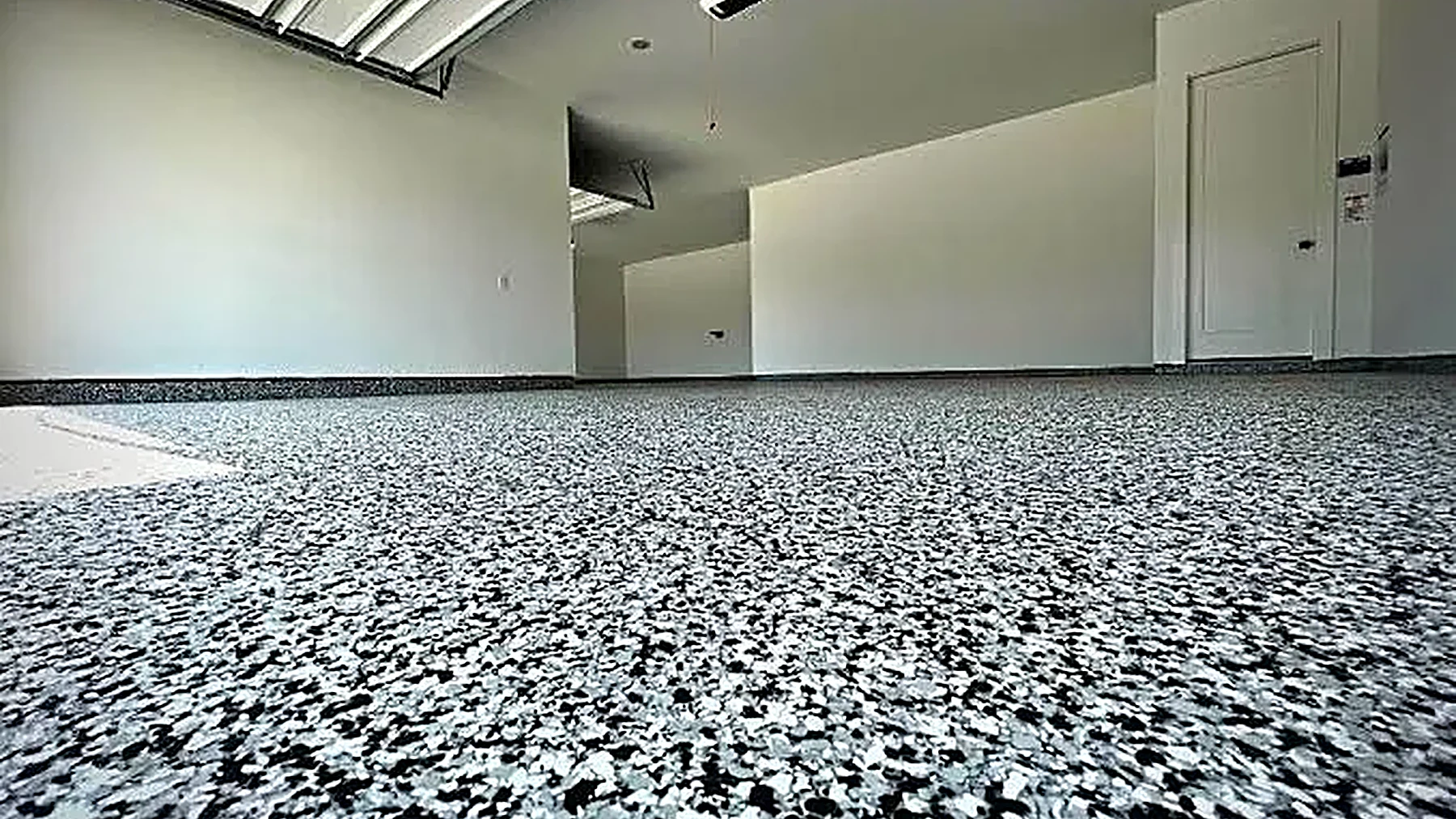
A garage floor coating is an investment, so the natural question before you commit is how many years you will actually get out of it. In the Treasure Valley the honest answer depends heavily on two things: the quality of the product and, even more, the quality of the prep underneath it. A professionally installed coating can last two decades or more, while a cheap DIY kit can peel before its second Boise winter. Here is a realistic look at coating lifespan in our climate and what makes the difference between a floor that lasts and one that fails.
A quality professional coating, properly installed over a correctly prepped slab, typically lasts 15 to 20 years or more in a Treasure Valley garage. Polyaspartic systems, which are more UV-stable and flexible, often reach the upper end of that range and beyond. That is a decade or more past what a bare or DIY-coated slab delivers. The number assumes professional-grade materials and, critically, real surface preparation. Skip the prep and you can cut that lifespan to just a few years, which is why the cheapest option is rarely the most economical over time.
If you take one thing away, make it this: the coating is only as durable as its bond to the concrete, and that bond is made or broken during prep. A coating mechanically ground into a properly opened slab fuses to the concrete and stays put for decades. A coating rolled over a smooth, sealed, or dirty floor, as the DIY kits instruct, has nothing to grip and peels as soon as our freeze-thaw cycles and hot tires go to work. This is the number one reason professional floors outlast box-store ones by many years, and it is why we never shortcut the grinding step.
Not all coatings are created equal. Professional systems use higher-solids, more durable resins and are applied at a proper thickness in multiple coats, often a base coat, a broadcast of flakes, and a tough clear topcoat, whereas thin single-coat DIY products wear through quickly. Polyaspartic topcoats add UV stability and abrasion resistance that extend life further. A thicker, layered professional system simply has more material to give before it wears, and it resists the chemicals and impacts a working Boise garage throws at it. You are paying for durability you can measure in years.
The Treasure Valley climate is a genuine test. Freeze-thaw cycling stresses the concrete and any coating bonded to it, magnesium-chloride deicer and road salt drip off vehicles and attack weak coatings, and hot tires pulling into a cold garage can lift a poorly bonded floor through hot-tire pickup. A quality coating is chemically resistant and, because it is properly bonded, rides out the thermal cycling. A cheap coating is precisely what these forces peel and discolor first. Building for our specific conditions is what turns a good product into a long-lasting floor.
Lifespan also depends on the beating the floor takes. A two-car garage that mostly parks vehicles and stores gear will see its coating last at the long end of the range, while a busy shop with dropped tools, heavy equipment, and constant traffic wears faster. Even so, a professional coating handles hard use far better than bare concrete or a thin kit. Matching the system to how you actually use the space, a tougher build for a workshop, for instance, ensures the floor lasts as long as possible for your situation.
Maintaining a coated floor is easy and pays off. Rinse or mop away road salt and deicer in winter so it does not sit on the surface, wipe up oil and chemical spills reasonably promptly, use a soft broom or mop rather than harsh abrasives, and put mats under areas that see the worst tire and drip exposure. A quality coating is built to be low-maintenance, but these small habits keep it looking new and push its lifespan toward the top of the range. The American Concrete Institute offers good background on concrete and coating performance if you want to dig deeper.
A quality floor ages slowly and warns you. Watch for worn traffic paths where the topcoat has thinned, small chips or edges beginning to lift, dulling or yellowing on cheaper products, and any peeling, which on a professional floor is rare and usually points to a spot that needs touch-up rather than a full redo. Often a coating can be refreshed with a new topcoat rather than fully replaced, extending its life further. Catching wear early keeps a simple maintenance coat from turning into a full re-do.
With the building boom across Meridian, Nampa, and the wider Treasure Valley, a lot of Boise homeowners are coating brand-new garage slabs, and timing matters for lifespan. Fresh concrete needs to cure fully, generally around a month, before it can take a coating properly, because trapped moisture in a green slab will push a coating right back off and cut its life short. Once the slab has cured, a new floor is actually an ideal candidate, since it has not yet absorbed years of oil and salt that complicate prep on an older garage. Coating a new home's garage early also protects the concrete from the very first winter of deicer and hot-tire abuse, so the slab never gets a chance to stain or spall. We check slab moisture and age before we coat, whether it is a new build in a Meridian subdivision or an established Boise garage, because putting a quality product on a slab that is not ready is one of the surest ways to shorten a floor that should have lasted decades. Getting that timing right is part of what separates a coating that goes the distance from one that fails early through no fault of the product itself.
A professional garage floor coating in Boise should give you 15 to 20 years or more, but only when it is installed over a properly ground slab with quality materials. Prep is the difference-maker, our winters are the test, and simple care extends the payoff. If you want a floor that lasts decades instead of seasons, insist on real preparation and professional-grade products. Reach out and we will show you exactly how we build coatings to go the distance in the Treasure Valley.
A properly installed professional coating over a correctly prepared slab typically lasts 15 to 20 years or more, and a polyaspartic system can push toward the higher end. That assumes real surface prep and a quality product. The cheap DIY roll-on kits sold at big-box stores often peel within a couple of Idaho winters, which is why professional prep and materials are the whole game when it comes to lifespan.
It can if the coating was not built for it. Freeze-thaw cycles, road salt and magnesium-chloride deicer dripping off your vehicle, and hot tires pulling into a cold garage all stress a floor. A quality professional coating is chemically resistant and bonded to a properly ground slab, so it shrugs these off for years. A poorly bonded or bargain coating is exactly what our winters peel up first.
Epoxy vs. Polyaspartic: Which Garage Floor Coating Is Right for You? — Epoxy and concrete floor coatings installed across Boise and the Treasure Valley.