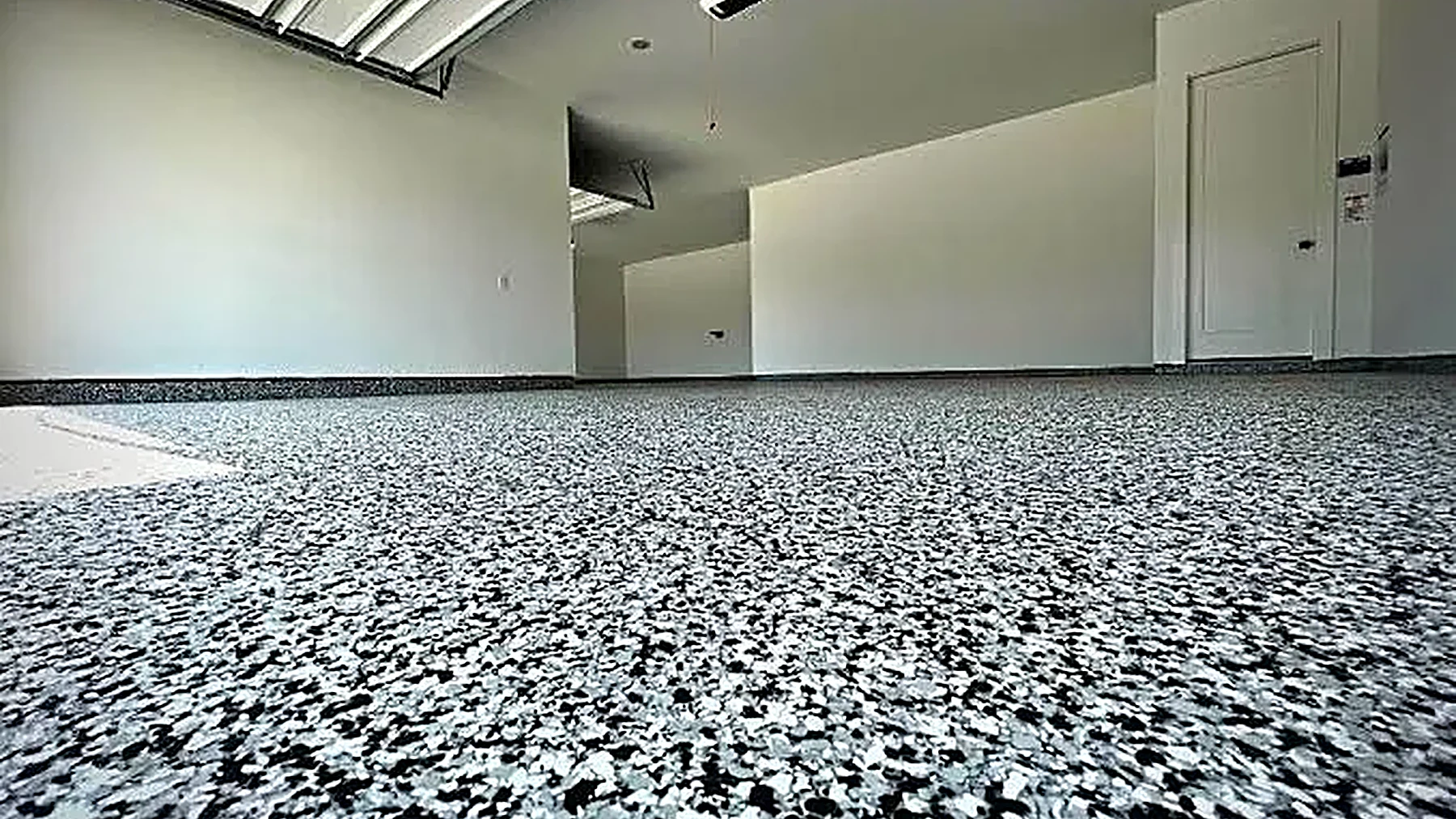
When Boise homeowners want to upgrade a bare concrete floor, whether in a garage, a basement, or a modern living space, three options come up most often: stained concrete, polished concrete, and epoxy or polyaspartic coatings. They look different, cost different amounts, and hold up very differently, especially in a Treasure Valley climate that swings from hot summers to freeze-thaw winters. This guide compares all three honestly so you can match the right finish to the right space, without the marketing spin.
It helps to understand what each actually is. Stained concrete uses an acid or water-based stain to color the existing slab, then a sealer to protect it, leaving a natural, variegated look with the concrete's texture intact. Polished concrete grinds the surface progressively smoother and denser with diamond tooling until it shines, coloring optional, producing a sleek, hard, low-maintenance floor. Epoxy and polyaspartic coatings apply a protective resin layer, often with decorative flakes or a metallic finish, that bonds to the prepared concrete and seals it completely. Each is a genuinely different approach, not just a different look.
For a garage, durability against our specific conditions is the deciding factor, and this is where coatings pull ahead. Idaho winters bring magnesium-chloride road brine, snowmelt, and freeze-thaw that punish concrete, and hot tires in summer can pull at weaker finishes. A quality epoxy or polyaspartic coating fully seals the slab against that deicer and moisture and resists hot-tire pickup, chemicals, and abrasion. Stained concrete, being just colored and sealed, offers far less protection and needs resealing. Polished concrete is hard and handsome but its open surface can still absorb stains and road salt over time. For the Treasure Valley garage specifically, a coating is usually the most protective choice.
Stained concrete has real strengths in the right setting. It is often the most affordable of the three, it showcases the natural character of concrete with rich, mottled color, and it suits patios, interior living floors, and spaces where a warm, organic look is the goal. The tradeoff is protection and upkeep: stain plus sealer does not armor the floor the way a coating does, and the sealer needs periodic reapplication, more so on anything exposed to weather or heavy wear. For a covered patio or an interior accent floor, though, stained concrete can be a beautiful, budget-friendly option.
Polished concrete is a favorite for modern interiors, showrooms, and some basements because it is extremely durable underfoot, low-maintenance once done, and has a clean, contemporary sheen. It uses the slab you already have with no added coating to wear off. The considerations are that it requires a sound, quality slab to polish well, it can be cold and hard, and while dense, it is not as chemical- and stain-proof as a sealed coating, so it is less ideal for a garage that meets winter road brine. For an interior living or commercial space, polished concrete is often an excellent, long-lasting choice. The American Concrete Institute offers technical background at concrete.org.
Coatings are the go-to for garages, shops, and any floor that needs to shrug off chemicals, moisture, hot tires, and heavy use, which describes most Boise garages. They seal the concrete completely, resist the deicer and freeze-thaw that define our winters, wipe clean easily, and come in decorative flake and metallic looks that hide imperfections. Polyaspartic in particular cures fast and handles UV and temperature swings well. The main considerations are that proper surface prep is essential and that the upfront cost is higher than a basic stain, though the protection and longevity justify it for hard-working floors. Our epoxy versus polyaspartic guide compares the two coating types.
Budget usually tracks with protection. Stained concrete is typically the least expensive upfront but needs the most ongoing resealing, so its lifetime cost climbs. Polished concrete sits in the middle and lasts a long time with little maintenance in the right interior setting. Epoxy and polyaspartic coatings cost more upfront but deliver years of tough, low-maintenance performance in demanding spaces like garages, making them a strong value where durability matters. The cheapest option is rarely the cheapest over ten years once you factor in resealing and wear. Our coating lifespan guide digs into longevity.
The honest takeaway is that there is no single best finish, only the best fit for each space and how it is used. For a Treasure Valley garage or shop that battles winter brine and hot tires, a coating is usually the right call. For a warm, characterful patio or interior accent, stained concrete can be perfect and economical. For a modern interior or showroom floor, polished concrete is hard to beat. A reputable local pro will steer you to the option that actually suits your slab, your climate exposure, and your budget rather than pushing one product for every job.
Whichever finish you lean toward, the quality of the surface preparation matters more than almost anything else, and it is a useful lens for comparing contractors and quotes across Meridian, Nampa, and Boise. Every one of these finishes depends on proper prep to succeed. A coating needs the concrete mechanically ground or shot-blasted so the resin bonds into the profile rather than sitting on top and peeling. Polished concrete lives or dies on the grinding sequence. Even stained concrete requires the slab to be clean, open, and free of old sealers so the stain penetrates evenly. When a bid comes in dramatically lower than the others, the corner being cut is almost always prep, which is exactly the corner that determines whether the floor lasts a decade or fails in a year. This is especially true for coatings over a Boise garage slab that will face freeze-thaw and deicer, since a poorly bonded coating lets moisture and salt work underneath it. When you evaluate proposals, ask each contractor how they prepare the surface, what equipment they use, and how they handle any cracks or moisture issues in the slab. The answers separate the professionals from the price-shoppers. A finish is only as good as what it is bonded to, so understanding prep helps you buy on value rather than on the lowest number, and it is the single best predictor of whether you will be happy with the floor years from now.
Stained, polished, and coated concrete each have their place; the key is matching the finish to the demands of the room and the realities of Boise weather. If your project is a garage or shop that sees snow, deicer, and daily use, a quality coating almost always delivers the best protection and value. If it is an interior or covered space, the other finishes may serve you beautifully. We are glad to look at your floor, talk through how you will use it, and recommend the finish that will hold up and look great for years in the Treasure Valley.
For a garage, an epoxy or polyaspartic coating usually wins. It fully seals the slab against the magnesium-chloride road brine, snowmelt, and freeze-thaw that define Treasure Valley winters, and it resists hot-tire pickup and chemicals. Polished concrete is durable and handsome but its open surface can still absorb stains and road salt, making it better suited to interiors than a winter-exposed garage.
Stained concrete is typically the least expensive upfront, but it needs periodic resealing, so its lifetime cost climbs, especially on anything exposed to weather. Polished concrete sits in the middle, and coatings cost more upfront but deliver years of tough, low-maintenance performance. For a hard-working garage, the coating is often the best value over ten years despite the higher starting price.
Epoxy vs. Polyaspartic: Which Garage Floor Coating Is Right for You? — Epoxy and concrete floor coatings installed across Boise and the Treasure Valley.