Home > Blog > Guides
Guides • August 24, 2026
Cracked Garage Floor? Repair Before Coating in Boise
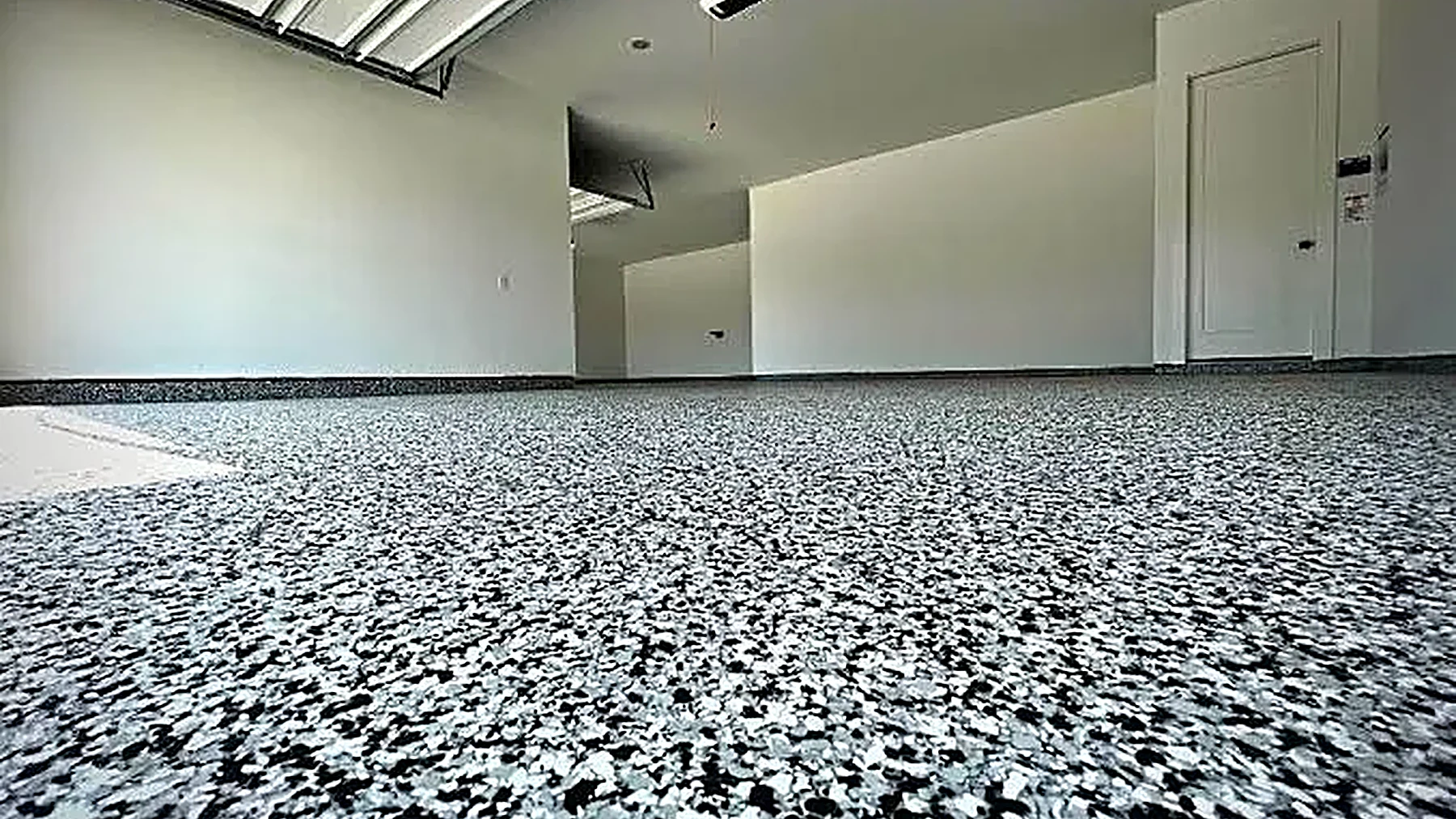
Cracks are the most common problem we see in Boise garage floors, and they are also the most commonly ignored before a coating goes down. Homeowners assume a fresh epoxy or polyaspartic finish will simply cover the crack up. It will not. A coating applied over an unrepaired crack will show that crack through the surface and often fail right along it. In the Treasure Valley, where freeze-thaw keeps concrete moving, repairing cracks properly before coating is the difference between a floor that lasts and one that fails in a season. Here is what you need to know.
Concrete cracks for several reasons, and our climate drives most of them. The Treasure Valley's freeze-thaw cycle, water seeps into concrete, freezes, expands, and pries it apart, is hard on slabs, especially near garage doors where snowmelt and road moisture collect. Add normal concrete shrinkage as it cured, settling of the ground beneath, and the weight of vehicles, and cracks are almost inevitable over time. Understanding the cause matters, because it tells us how to repair the crack so it stays repaired.
The first step is diagnosing the crack. Hairline and minor surface cracks are cosmetic and straightforward to fill and blend before coating. Wider cracks, cracks with height difference between the two sides, and cracks that are still actively moving are more serious and need a different, more robust repair, sometimes indicating settling or a structural issue. A good contractor evaluates each crack rather than treating them all the same, because the wrong repair on the wrong crack simply fails again.
A floor coating is a thin, hard layer bonded to the concrete. It moves with the slab beneath it. When the concrete under a coating continues to shift and open a crack, the rigid coating cannot bridge that movement and cracks along the same line, often chipping and lifting at the edges. In Boise, where freeze-thaw keeps working on the slab all winter, an uncoated crack that was ignored becomes the exact spot where the beautiful new finish breaks down first.
Repairing cracks correctly before coating involves cleaning the crack out, then filling it with a quality repair material, typically a polymer or epoxy-based filler engineered to bond and flex appropriately with the concrete. The repair is then ground flush so it sits level with the surrounding floor. Done right, the filled crack becomes part of a smooth, sound surface ready to accept the coating, rather than a weak line waiting to reappear. The materials and technique matter, which is why this is not a job for a tube of hardware-store caulk.
Crack repair goes hand in hand with proper surface preparation. Mechanical grinding of the whole floor, the professional standard, opens the concrete for the coating to bond and reveals cracks and weak spots that need attention before coating. Skipping grinding, or acid-etching instead, not only weakens the bond but can hide problems that then surface later. Good prep and thorough crack repair are two halves of the same foundation for a coating that lasts in the Treasure Valley.
Sometimes a crack is a symptom of something bigger, water intrusion, poor drainage, or settling soil. Simply filling the crack without addressing the cause means it will likely return. Part of a proper assessment is looking at why the crack formed: is water pooling at the garage door, is the slab settling in one area? Addressing drainage or settling issues where possible protects both the repair and the coating from the forces that caused the damage in the first place.
Homeowners often worry the repair will be visible. In practice, well-repaired hairline and minor cracks disappear under a quality coating, especially flake and metallic systems that camouflage minor surface variation with their pattern. A solid-color coating hides slightly less but still conceals a good repair well. Large structural cracks are the exception and are handled honestly, we tell you what to expect rather than promising a flawless result over a serious crack.
A garage floor coating is a real investment, and skipping crack repair to save a little up front is how that investment gets wasted. A coating over unrepaired cracks fails early, and fixing it later means dealing with the failed coating on top of the original crack, more expensive than doing it right the first time. In Boise's climate, proper crack repair before coating is not an upsell; it is the step that makes the whole project worthwhile.
The right contractor looks at your cracks before quoting a coating and tells you the truth: which cracks are simple, which need real repair, and whether any point to a larger issue. That honesty up front protects you from a finish that fails and from paying for repairs you do not need. If you have cracks in your Treasure Valley garage floor and are thinking about coating it, the smartest first move is an honest look at the concrete.
Cracks in a Boise garage floor must be repaired before any coating goes on, because our freeze-thaw climate will otherwise drive them right back through the finish. Proper diagnosis, quality repair materials, thorough grinding, and attention to the underlying cause turn a cracked slab into a sound base for a coating that lasts for years. If your garage floor is cracked, we are glad to assess it honestly and repair it right before we ever talk about the finish.
Concrete repair and coating both perform best in the right conditions, and in the Treasure Valley that means paying attention to temperature and moisture. Repairs need time to cure and bond, and coatings need appropriate temperatures to set correctly, one reason fast-curing polyaspartic systems are popular here for shoulder-season work. Scheduling crack repair and coating together, in suitable weather, ensures the whole floor system starts life properly cured. Rushing a repair in freezing conditions or coating over a damp slab is exactly how problems creep back in.
Not every line in your garage floor is a defect. Control joints are the intentional grooves cut into concrete to direct where it cracks as it cures, and they are handled differently from random cracks. A knowledgeable installer knows whether to fill and coat over a control joint or honor it in the finished floor, decisions that affect how the coating performs long term. Confusing a control joint with a crack, or treating them the same, is a common DIY mistake that a professional avoids.
Before any coating quote, insist on someone actually looking at your concrete. A quick inspection reveals whether your cracks are cosmetic or serious, whether there is a moisture or settling issue, and what repair each crack truly needs. That honest assessment protects you from paying for a coating that will fail and from unnecessary work. In Boise, where freeze-thaw makes concrete condition so important, that upfront look is the most valuable step in the whole project, and it is how we start every job.
You can, but you should not. A coating applied over an unrepaired crack will telegraph that crack through the finish and often fail there as the concrete continues to move with our freeze-thaw cycles. Proper crack repair before coating is what lets the finished floor look seamless and hold up through Treasure Valley winters.
With quality repair and the right coating, most cracks become nearly invisible, especially under a flake or metallic system that hides minor imperfections. Hairline cracks can be filled and blended so you would never know they were there. Large structural cracks are addressed differently, and we tell you honestly what to expect before we start.
Epoxy vs. Polyaspartic: Which Garage Floor Coating Is Right for You? — Epoxy and concrete floor coatings installed across Boise and the Treasure Valley.