Home > Blog > Guides
Coating Failures • August 28, 2026
Hot Tire Pickup: Why Cheap Garage Coatings Peel in Boise, ID
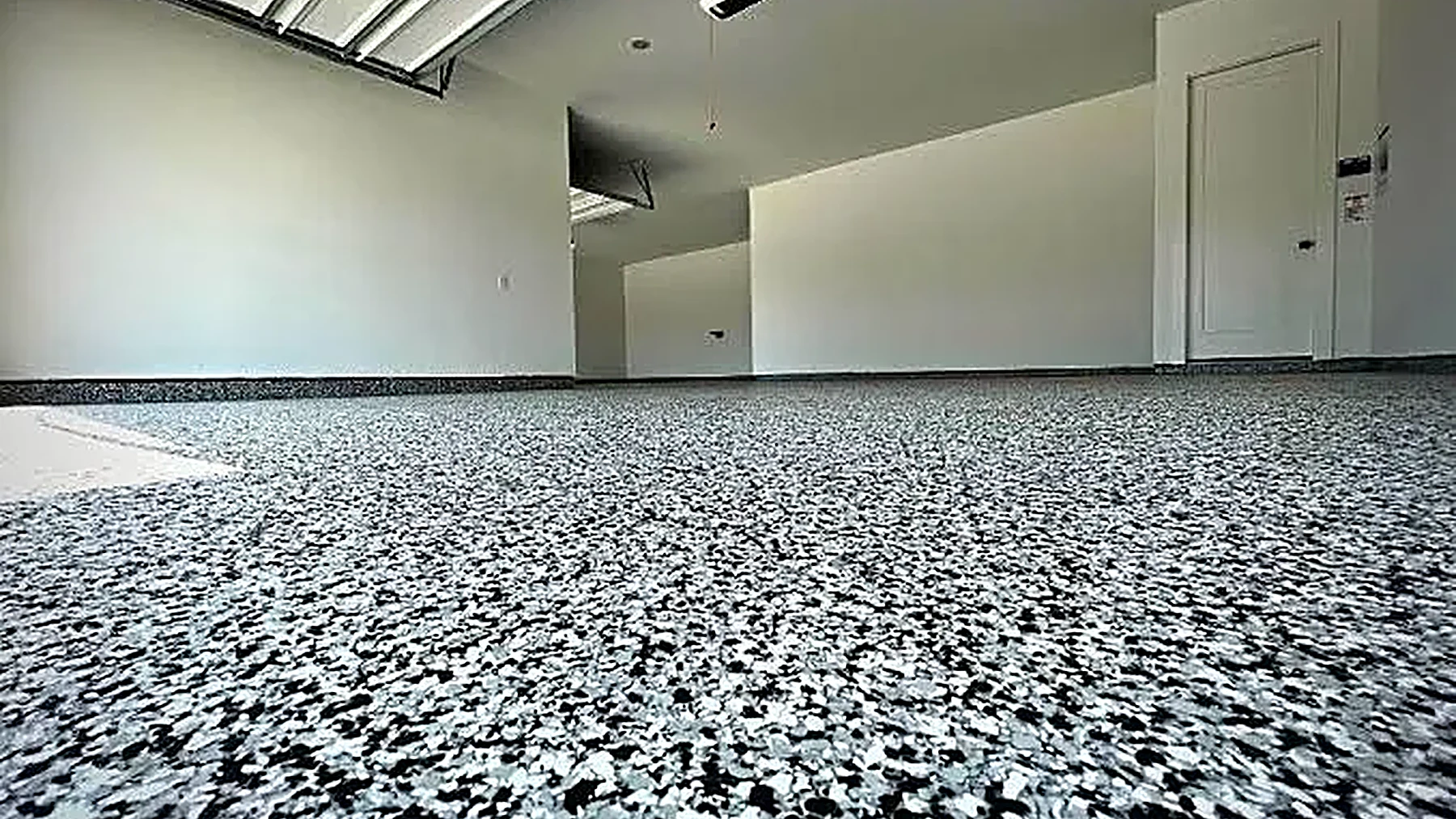
There is a very specific, very frustrating way that cheap garage floor coatings fail, and it happens in the exact spot you park. The coating peels, curls, and lifts right where your tires sit, sometimes coming up in sheets stuck to the rubber. This is hot tire pickup, and it is one of the most common reasons Boise homeowners call us to redo a floor they, or a bargain installer, coated a year or two earlier. Understanding what causes it explains a lot about why coating quality and preparation matter so much.
The name describes it well. As you drive around the Treasure Valley, your tires heat up from friction and road contact. When you pull into the garage and park, those warm tires press against the floor coating with the full weight of the vehicle. Heat softens a weak coating's bond, and the tire, as it cools, grips the surface. Drive off the next morning and the tire can peel the coating right off the concrete, leaving bare patches in the parking tracks. It is a bond failure, triggered by heat and pressure in one concentrated spot.
Hot tire pickup is overwhelmingly a problem of cheap product and poor prep. Big-box epoxy kits are thin, and homeowners typically apply them over a slab that was acid-etched or merely cleaned rather than mechanically ground. That leaves the coating sitting on the surface instead of bonded into it, and a surface bond is exactly what hot tires defeat. The coating looked fine on day one, which is why people trust it, but it never had the grip to survive a warm tire parked on it through a Boise summer. The failure was built in from the prep stage.
A professionally installed floor beats hot tire pickup two ways. First is preparation: diamond-grinding the concrete opens the surface so the coating mechanically locks into it, creating a bond a tire cannot break. This is the single most important step, and it is the one bargain jobs skip. Second is the coating itself, since quality epoxy and polyaspartic systems are formulated and rated to resist hot tire pickup in a way thin DIY kits are not. Put proper prep together with a real coating and parked tires, warm or not, simply have nothing to grab. The floor stays put.
Boise summers get hot, and that heat amplifies the problem. Tires driven on scorching Treasure Valley pavement in July arrive in the garage hotter than they would in a mild climate, and a garage without air conditioning stays warm enough to keep a weak coating's bond soft. The combination of hot tires and a warm slab is punishing on any coating that was not properly bonded. It is one more reason that, in our climate, the shortcuts that cause hot tire pickup show up faster and worse than they might elsewhere.
Hot tire pickup is really a symptom, and the disease is inadequate preparation and cheap material. When you see a coating lifting in the tire tracks, you are looking at a floor that was never ground and bonded correctly, or a product too thin for the job. The fix is not another coat of the same kit; it is grinding the concrete back to a sound surface and installing a coating engineered to bond and resist heat. Done right the first time, a Boise garage floor never picks up on a tire, no matter how hot the day or how far you drove. For coating and surface-prep standards, the industry association SSPC and its resources on concrete surface preparation are referenced by quality installers at sspc.org.
It is when a coating peels up and sticks to your tires. A vehicle driven around Boise heats its tires, and when it parks on a coated floor, that heat plus the tire pressure softens the bond of a weak coating. As the tire cools it grips the coating, and when you drive off it lifts the finish right off the concrete. It almost always shows up first in the tracks where you park.
With proper preparation and the right coating, not a thicker layer of the wrong one. The concrete must be mechanically ground so the coating bonds into the surface rather than just sitting on top, and the coating itself should be a professional epoxy or polyaspartic system rated to resist hot tire pickup. DIY kits over an etched or dirty slab are the classic recipe for it. Prep and product together are what defeat it.
Epoxy vs. Polyaspartic: Which Garage Floor Coating Is Right for You? — Epoxy and concrete floor coatings installed across Boise and the Treasure Valley.