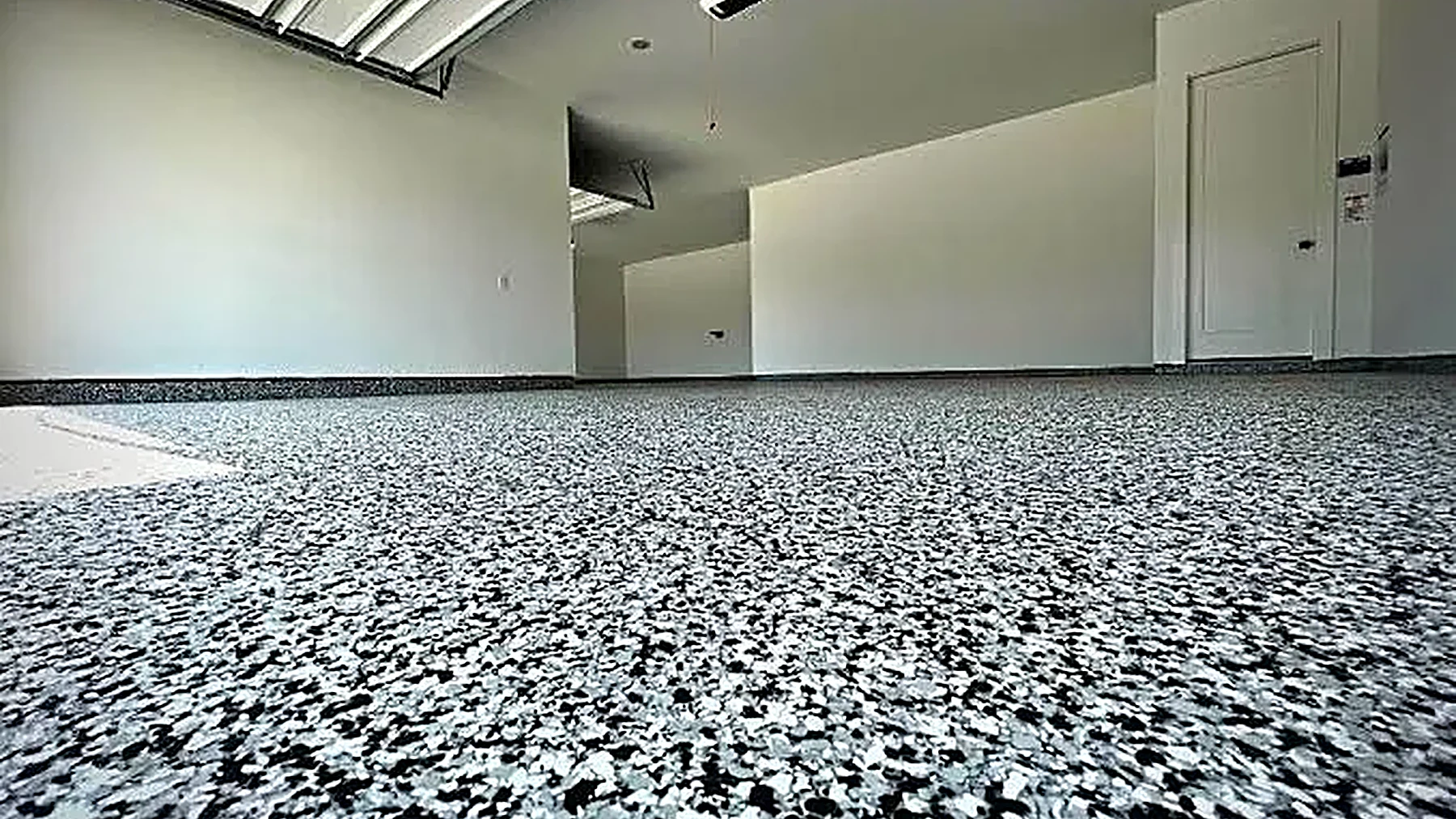
The Treasure Valley is booming, and nowhere faster than the new subdivisions spreading across Meridian, Kuna, and Star. If you are building or just closed on a new-construction home, that pristine bare concrete garage floor is a blank slate, and coating it is one of the smartest early upgrades you can make. But new concrete has rules of its own, and coating it too soon or without the right prep is a fast way to watch an expensive floor peel. Here is what every new Boise-area homeowner should know before coating a fresh garage.
The single most important rule: fresh concrete needs time to cure before it can take a coating. Newly poured slabs release moisture and continue to chemically cure for weeks, and a coating applied over green concrete traps that moisture and fails, bubbling, peeling, or delaminating. The general standard is to let a new slab cure for around 28 days minimum before coating, and in some cases longer. Builders rarely coat garages, so this is on you to time correctly, and rushing it is the most common new-construction coating mistake.
Even after 28 days, a professional does not just assume the slab is ready, we test it. Moisture testing tells us whether vapor is still moving up through the slab at a rate that would compromise the coating. In the Treasure Valley, slab moisture varies with the season and the lot's drainage, so this step matters. If the test shows too much moisture, the right move is either to wait or to use a moisture-mitigating primer designed for the situation, rather than gambling on adhesion.
People assume a brand-new floor is clean enough to coat as is. It is not. New slabs are often coated with curing compounds and have a smooth, sealed surface layer that coatings cannot grip. Proper mechanical prep, diamond grinding or shot blasting to open the concrete pores, is just as essential on new concrete as on old. Skipping prep because the floor looks clean is why so many DIY and cut-rate coatings on new homes fail within a year. The prep, not the product, is what makes a coating last.
There is a real advantage to coating a new garage before it fills up with cars, storage, and gym equipment. An empty garage is faster and cheaper to coat, there is nothing to move, and you start life in the home with a finished, sealed, easy-to-clean floor instead of concrete that is already staining. For Boise buyers moving into a new build, scheduling the coating in that window between closing and moving in is the ideal play.
A new Treasure Valley garage will face the same enemies as any other: freeze-thaw cycles, snowmelt, and the magnesium-chloride deicer that cars track in all winter. Coating from the start protects the slab from that chemical and moisture attack before it can ever begin, whereas bare new concrete starts absorbing salt and staining the first winter. Choosing a system built for our climate, typically a polyaspartic or high-quality epoxy with the right topcoat, sets the floor up to last for many years.
New-home buyers often want the showroom look, and a flake or metallic system delivers it while adding real slip resistance and durability. Polyaspartic topcoats cure fast, resist the winter salt and UV, and can often be installed in a single day, which is convenient when you are coordinating a move. We match the system to how you will actually use the garage, from a clean daily-driver bay to a full workshop or gym, so the floor fits your life in the new house.
The best results come from planning the coating into your move timeline: confirm the slab has cured the needed weeks, schedule the moisture test and prep, and get it coated in the empty-garage window. We are glad to look at your new Meridian or Boise garage and tell you honestly whether it is ready or needs more cure time, because we would rather wait a week than watch a rushed coating fail. For concrete moisture and coating standards, the American Concrete Institute is a solid technical reference.
One detail new-home buyers overlook is how a coating interacts with the builder relationship. Most Treasure Valley builders do not coat garage floors and have no objection to you doing it after closing, but it is worth confirming that grinding the slab will not affect any concrete warranty, and worth waiting until after any builder walk-throughs and slab repairs are complete. We are used to timing coatings around new-build schedules in Meridian and Kuna, working in that window after the builder is done but before you fill the garage, so the process is smooth and nothing conflicts with your closing or move.
New-construction garage floor coatings across Boise, Meridian, Kuna, Star, Eagle, and the Treasure Valley.
Generally at least 28 days, and sometimes longer. Coating green concrete traps moisture and causes peeling. We also moisture-test the slab before coating, since Treasure Valley slab moisture varies by season and lot drainage.
That is the ideal time. An empty garage is faster and cheaper to coat with nothing to move, and you start out with a sealed, easy-clean floor rather than concrete that stains and absorbs winter salt from day one.
Epoxy vs. Polyaspartic: Which Garage Floor Coating Is Right for You? — Epoxy and concrete floor coatings installed across Boise and the Treasure Valley.
The Treasure Valley is booming, and nowhere faster than the new subdivisions spreading across Meridian, Kuna, and Star. If you are building or just closed on a new-construction home, that pristine bare concrete garage floor is a blank slate, and coating it is one of the smartest early upgrades you can make. But new concrete has rules of its own, and coating it too soon or without the right prep is a fast way to watch an expensive floor peel. Here is what every new Boise-area homeowner should know before coating a fresh garage.
The single most important rule: fresh concrete needs time to cure before it can take a coating. Newly poured slabs release moisture and continue to chemically cure for weeks, and a coating applied over green concrete traps that moisture and fails, bubbling, peeling, or delaminating. The general standard is to let a new slab cure for around 28 days minimum before coating, and in some cases longer. Builders rarely coat garages, so this is on you to time correctly, and rushing it is the most common new-construction coating mistake.
Even after 28 days, a professional does not just assume the slab is ready, we test it. Moisture testing tells us whether vapor is still moving up through the slab at a rate that would compromise the coating. In the Treasure Valley, slab moisture varies with the season and the lot's drainage, so this step matters. If the test shows too much moisture, the right move is either to wait or to use a moisture-mitigating primer designed for the situation, rather than gambling on adhesion.
People assume a brand-new floor is clean enough to coat as is. It is not. New slabs are often coated with curing compounds and have a smooth, sealed surface layer that coatings cannot grip. Proper mechanical prep, diamond grinding or shot blasting to open the concrete pores, is just as essential on new concrete as on old. Skipping prep because the floor looks clean is why so many DIY and cut-rate coatings on new homes fail within a year. The prep, not the product, is what makes a coating last.
There is a real advantage to coating a new garage before it fills up with cars, storage, and gym equipment. An empty garage is faster and cheaper to coat, there is nothing to move, and you start life in the home with a finished, sealed, easy-to-clean floor instead of concrete that is already staining. For Boise buyers moving into a new build, scheduling the coating in that window between closing and moving in is the ideal play.
A new Treasure Valley garage will face the same enemies as any other: freeze-thaw cycles, snowmelt, and the magnesium-chloride deicer that cars track in all winter. Coating from the start protects the slab from that chemical and moisture attack before it can ever begin, whereas bare new concrete starts absorbing salt and staining the first winter. Choosing a system built for our climate, typically a polyaspartic or high-quality epoxy with the right topcoat, sets the floor up to last for many years.
New-home buyers often want the showroom look, and a flake or metallic system delivers it while adding real slip resistance and durability. Polyaspartic topcoats cure fast, resist the winter salt and UV, and can often be installed in a single day, which is convenient when you are coordinating a move. We match the system to how you will actually use the garage, from a clean daily-driver bay to a full workshop or gym, so the floor fits your life in the new house.
The best results come from planning the coating into your move timeline: confirm the slab has cured the needed weeks, schedule the moisture test and prep, and get it coated in the empty-garage window. We are glad to look at your new Meridian or Boise garage and tell you honestly whether it is ready or needs more cure time, because we would rather wait a week than watch a rushed coating fail. For concrete moisture and coating standards, the American Concrete Institute is a solid technical reference.
One detail new-home buyers overlook is how a coating interacts with the builder relationship. Most Treasure Valley builders do not coat garage floors and have no objection to you doing it after closing, but it is worth confirming that grinding the slab will not affect any concrete warranty, and worth waiting until after any builder walk-throughs and slab repairs are complete. We are used to timing coatings around new-build schedules in Meridian and Kuna, working in that window after the builder is done but before you fill the garage, so the process is smooth and nothing conflicts with your closing or move.
Epoxy vs. Polyaspartic: Which Garage Floor Coating Is Right for You? — Epoxy and concrete floor coatings installed across Boise and the Treasure Valley.